 AURA AGRO IA
Livestock identification · 20 countries
What does your country require to identify cattle?
Ear tags, chips, farm registration and movement permits: country by country, with the authority and the source for each fact. Where we could not confirm a rule, we say so.
This is a guide, not an official document. Rules change and each authority has the final word: check with it before moving or selling animals. Reviewed October 20, 2026.
Argentina Mandatory in phases
Authority: SENASA · Official site
Since January 1, 2026, electronic individual identification is mandatory for cattle, buffalo and deer (SENASA Resolution 841/2025). Calves are tagged at weaning or before their first move, and every move is recorded. It starts with animals born from 2026 on, adding each new crop of calves until the whole herd is covered.
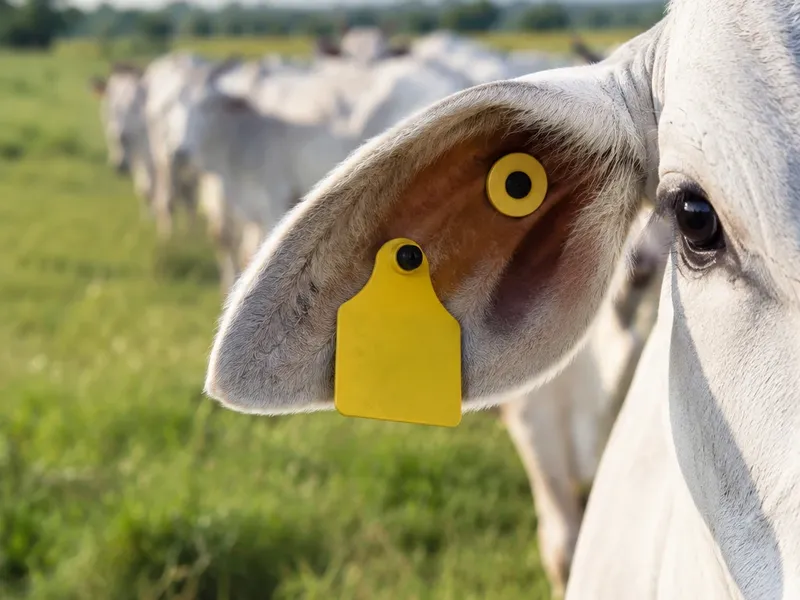
The official set is an electronic button tag in the right ear and a visual tag in the left (Resolution 530/2025). A bill (2282-D-2026) would exempt cow-calf producers; it is only a bill.
Bolivia No rule confirmed
Authority: SENASAG · Official site
We could not find a current individual cattle identification rule that we can confirm with an official source. Ask your departmental SENASAG office which registration is required and what document you need to move animals.
Brazil Mandatory in phases
Authority: MAPA · PNIB · Official site
The National Plan for Individual Identification of Cattle and Buffalo (PNIB) has had an official timeline since July 2025 (SDA/MAPA Ordinance No. 1,331/2025): four stages, through the end of 2032. From 2033, cattle or buffalo without individual ID and registration in the official system cannot be moved.
Each state may move faster once stages 1 and 2 are complete. Check with your state animal health agency.
Sources (2)
Chile Mandatory
Authority: SAG · Official site
Every bovine carries its Official Individual Identification Device (DIIO) and is registered in SIPEC. The DIIO has been electronic since 2013: animals born from January 1, 2013 are tagged before 6 months of age, or earlier if they leave the farm. The rules are in SAG Exempt Resolution 975 of 2022.
Sources (2)
Colombia Mandatory in phases
Authority: ICA · Official site
ICA Resolution 219 of 2026 makes individual identification of cattle and buffalo with the DIN mandatory, in stages, and Law 2585 of 2026 brings deforestation-free cattle ranching. We explain it all, in Spanish, on the Colombia page.
Sources (1)
Ecuador No rule confirmed
Authority: Agrocalidad · Official site
Ecuador has a National Animal Identification and Traceability System for cattle, with official registration and ear tags, but we could not find the current text or its deadlines to confirm them. Ask Agrocalidad what it requires today to register your farm and to move cattle.
Paraguay Mandatory in phases
Authority: SENACSA · Official site
Law 7,221 of 2023 created a mandatory animal identification system, starting with cattle. SENACSA set calf identification from February 1 to June 30, 2026. SITRAP, in place since 2004, remains voluntary and is the one used for exports.
Peru Official program · check
Authority: SENASA · Official site
Since 2020 the Ministry of Agriculture and SENASA have tagged cattle and pigs with a free official ear tag. We could not find when it becomes mandatory for the whole herd: ask your local SENASA office.
Uruguay Mandatory
Authority: MGAP · SNIG · Official site
Every bovine has carried mandatory individual ID since 2006 (Law 17,997): a visual tag and an electronic tag with the same number, supplied free by MGAP. Every move, change of owner, death or loss is reported to SNIG through an authorized operator.
Sources (2)
Venezuela No rule confirmed
Authority: INSAI · Official site
We could not find a current individual cattle identification rule that we can confirm with an official source. To move animals, ask INSAI about registering your farm and the movement permit.
Costa Rica Mandatory
Authority: MAG · SENASA
Decree 44336-MAG-S-SP-MOPT created the national individual identification and traceability system: every bovine carries an official ear tag with a chip and is registered in SENASA’s database. The extraordinary deadline to tag the remaining cattle is October 26, 2026: from then on, an animal without the official tag cannot leave its farm. According to MAG, the tag and registration are free for herds of up to 150 head.
Buffalo may be identified with a rumen bolus (2025 decree). There have been several extensions: check with SENASA whether there is a new one.
Sources (2)
Dominican Republic Official program · check
Authority: DIGEGA
The General Livestock Directorate has run the Cattle Traceability Program since 2014, with ear tags and registration, together with brucellosis and tuberculosis testing: it tagged 608,084 cattle in 2019. We could not find a rule making it mandatory for the whole herd: ask DIGEGA.
Sources (2)
El Salvador No rule confirmed
Authority: MAG · Official site
Every rancher must register their brand for cattle and horses with MAG; it is done online through SIMPLE.SV. We could not find a current individual ear-tag rule that we can confirm.
Guatemala Official program · check
Authority: MAGA · VISAR · Official site
MAGA runs the National Livestock Traceability System (SINAT-GT): official individual ID with two ear tags and a producer registry. It tagged 34,357 cattle in the last year (AGN, February 2026). We could not find when it becomes mandatory for the whole herd: ask VISAR.
Honduras Official program · check
Authority: SENASA Honduras · Official site
The National Agricultural Traceability and Registration System (SINART), created by Decree PCM-032-2018 and regulated by SENASA Agreement 001-2020, requires registration of people and farms that produce or trade. Since October 1, 2020, cattle move with the GUIASA permit. We could not find the timeline for individual ear tags: check with SENASA.
Nicaragua Official program · check
Authority: IPSA · Official site
IPSA runs cattle traceability (Animal and Plant Health Law 291) with mandatory technical standards for registration, ear-tag identification and movement. Tags are applied by authorized operators, such as cooperatives and ranchers’ associations. We could not find when it becomes mandatory for the whole herd: ask IPSA.
Panama Official program · check
Authority: MIDA · DINASA
Law 104 of 2013 created the National Livestock Traceability Program, and since 2015 MIDA has recorded cattle movements in the Trazar-Agro system. The National Assembly is studying a bill (171) to strengthen individual ID. Ask MIDA what it requires today.
Canada Mandatory
Authority: CFIA · Official site
Cattle, bison and sheep must carry an approved tag before leaving their farm of origin (Health of Animals Regulations, Part XV). They do not need one while living on the farm where they were born, but they cannot leave without it. CFIA has proposed changes that are not yet in force, and provinces may add requirements.
Mexico Official program · check
Authority: SENASICA · SINIIGA · Official site
The SINIIGA ear tag is the official ID for cattle. Several states require it by law (Nayarit, for example), and moving cattle requires a movement permit or zoosanitary certificate. We could not find a new federal rule from 2025 or 2026: check with your local cattlemen’s association or SENASICA.
Sources (2)
United States Mandatory
Authority: USDA · APHIS
Since November 5, 2024 (APHIS final rule, 9 CFR part 86), official ear tags must be both visually and electronically readable (EID) for cattle that need official ID to move between states: sexually intact cattle and bison 18 months and older, all dairy cattle, and cattle and bison for rodeos, shows and exhibitions. Each state may add its own rules.
What AURA helps with, and what it doesn’t
What AURA keeps for you
- Each animal’s ear tag or chip number, with its dam, weight and history.
- Vaccines, treatments with their withdrawal days, and weigh-ins.
- A QR code per animal with that history, to show buyers.
- Sales, with the buyer and the movement permit.
What it doesn’t do
- It is not an official system: it does not report to any authority.
- It does not replace your country’s registration, official tag or movement permit.
See something out of date for your country? Message us on WhatsApp and we will check it.
Keep every animal’s history
Free to start. On your phone and your computer, with the same account.